


Against the Single Peak
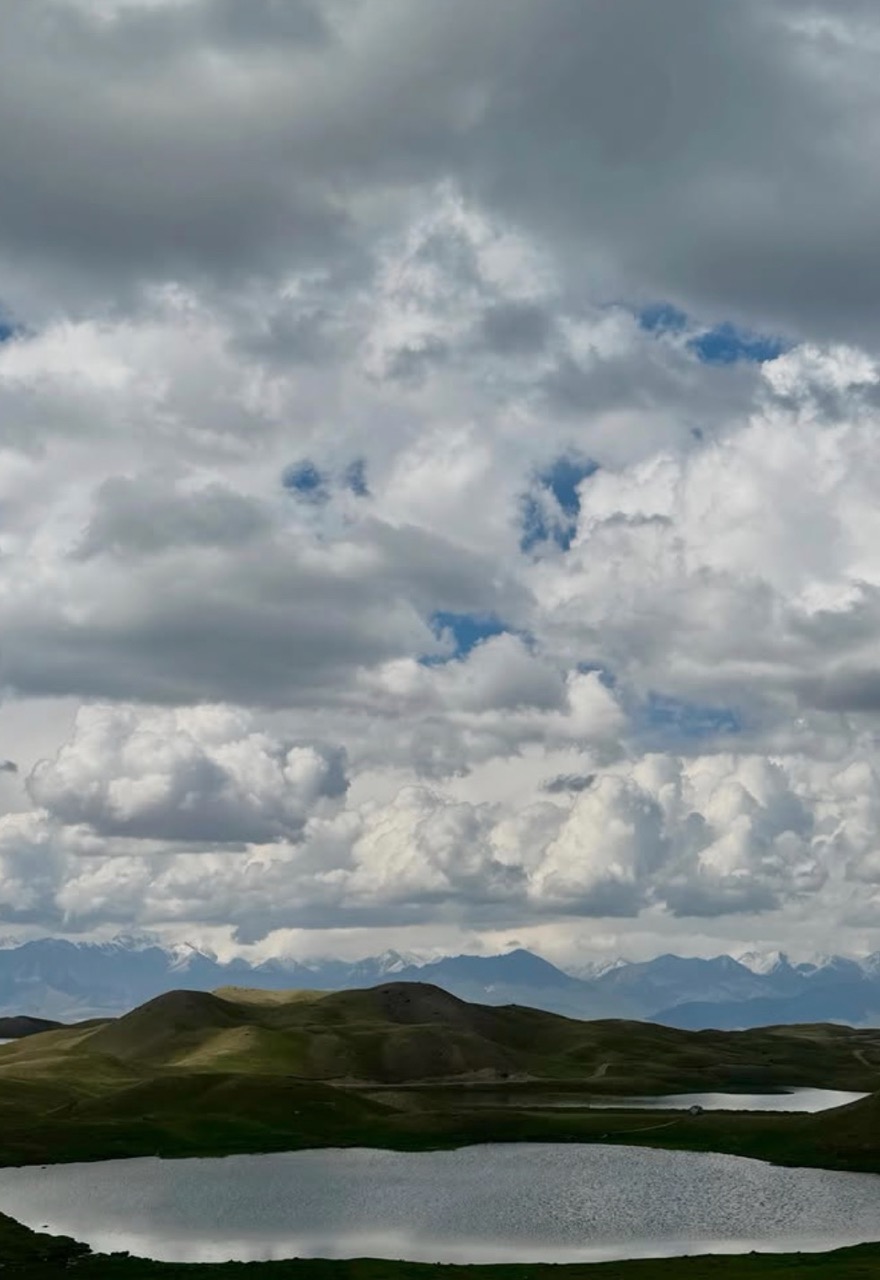
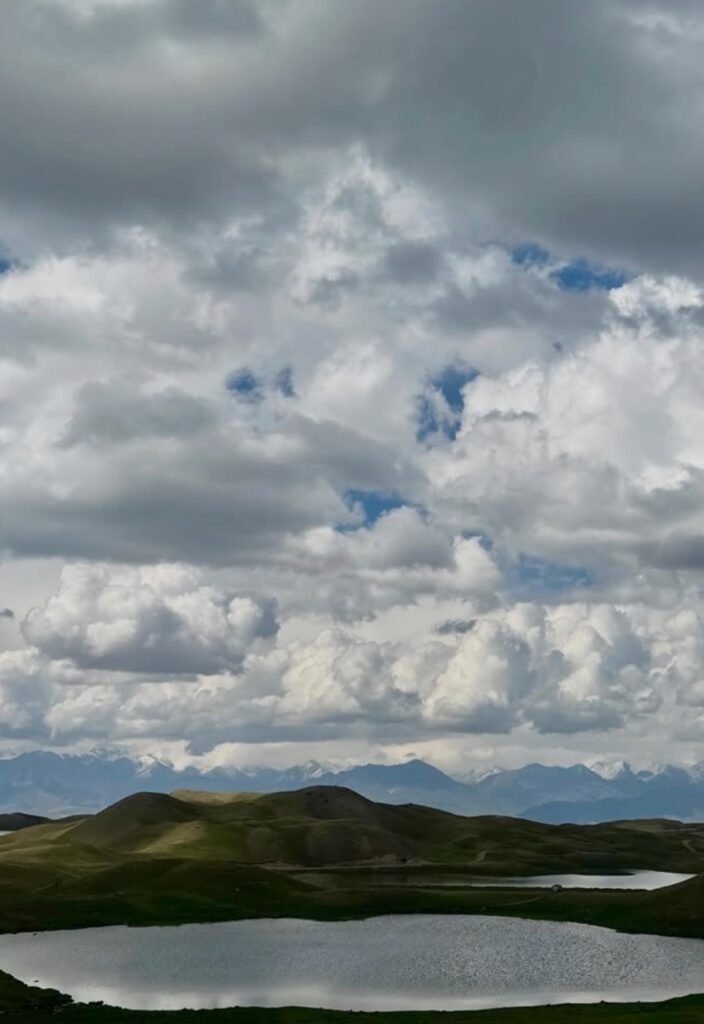
The Pamir Knot is one of the places on earth where geography refuses simplicity. It’s a vast highland convergence in Central Asia where the Himalayas, Karakoram, Hindu Kush, Kunlun, and Tian Shan mountain systems meet, press against one another, and radiate outward. It is neither a single range nor a clean line drawn across a map. It’s a geological complication in its own right — a place where pressure has become structure, and where collision over time has produced one of the most dramatic landscapes on earth.
Which brings us, once again, to the gravitational pull of metaphor. In my current musing, the Pamir Knot offers one of the richest metaphors yet, where brand and meaning are created as a landscape formed by pressure, relation, and time. Think convergence, not solitary peak.
This stirs my interest because branding so often begins with a search for the one thing. A singular idea, sentence, position…
Of course brands need clarity and organizing principles. They need a way to be understood without requiring endless explanation. But the pursuit of singularity can become reductive when it mistakes clarity for compression. Not every meaningful identity can be flattened into a single statement without losing what gives it force.
Against this backdrop I can close my eyes and imagine mountain systems instead of single peaks.
The Trouble With “The Summit”
The image of “the summit” is seductive. It suggests arrival, superiority, differentiation, and command. To stand at the peak is to see farther, rise above, occupy the highest ground. In brand strategy, this translates into the search for a dominant position — a place where the brand can stand apart and be seen clearly.
But summits can also be lonely places. They simplify the landscape by placing all value at the top. They imply hierarchy where there may be interdependence. They privilege altitude over relation.
The Pamir Knot invites a different way of seeing because its power rests in the meeting of multiple ranges. The landscape becomes meaningful because of how its forces meet.
This feels closer to how brands actually live. A brand is formed by many forces arriving at once: origin story, internal culture, audience desire, category convention, aesthetic inheritance, operational reality, future ambition. These forces don’t politely arrange themselves into a pyramid. They collide, overlap, fold, and lift. They create tension.
Which leads me to wonder: Can a brand actually be the manifestation of tension?
The Knot Is Not Confusion
The word “knot” can suggest something tangled, something stuck, something to be undone. But in the Pamirs, the knot is the structure itself, not a mistake.
In branding, complexity is often treated as a problem to solve. We want to untangle the mess, reduce the noise, cut through the clutter. And sometimes, that is exactly what the work requires. But not all complexity is clutter. Some complexity is geological. Some complexity is the natural result of multiple deep forces pressing into one another.
A brand with history may hold tensions between legacy and reinvention. A brand with broad audiences may need to speak across different emotional and cultural registers. A brand with ambitious ideas may resist being reduced to a single functional benefit. These are not necessarily signs of confusion. They may be signs that the brand contains real terrain. Within this framework the work is to understand the load-bearing logic — not to untie it.
Where is the pressure coming from? Which forces are structural, and which are merely incidental? What tensions create lift? What must be held together for the brand to remain true? These questions move us beyond simplification and toward interpretation. And along the way, they ask us to move past an editorial role to become cartographers.
Pressure Makes Form
Mountain systems are made through force: collision, compression, uplift, erosion, and time. The Pamir Knot is a reminder that under the right conditions, pressure can be both formative and destructive.
Brand pressure works similarly.
A company may feel pressure from a changing culture, from a restless internal team, from a category that has grown stale, from audiences who want something more honest than the old language can provide. These pressures are often uncomfortable. They can feel like threats to coherence. But they can also reveal where the brand is alive.
If we’re paying attention, pressure can reveal what has weight, exposing the fault lines between what a brand says and what it actually does. It reveals where language has become too small for the ambition. It shows which parts of the identity are brittle, and which can bear more than expected. Under pressure, the decorative falls away and the structure begins to show.
Convergence as Strength
A single peak draws the eye, but a knot generates a system.
That may be the most important lesson. The Pamir Knot is a place where ranges meet. It is also a place from which ranges extend. It gathers force, then sends it outward. Its power is both centripetal and generative.
A strong brand center should work the same way. It should generate meaning, not merely contain it. From a coherent center, language, design, experience, behavior, culture, and future offerings can radiate outward. In this way, the brand becomes less like a slogan and more like a geography — a terrain with internal logic, varied elevations, and multiple paths of movement.
This gives us a more generous model of brand architecture. Instead of forcing every expression to climb toward the same peak, we can ask how each expression belongs to the same landscape. A website, a voice system, a product experience, a hiring practice, a physical environment — each may occupy a different ridge, but all should be shaped by the same underlying geology.
Coherence, in this model, means the parts know where they come from.
Altitude and Perspective
High landscapes change perception. From below, the terrain can look chaotic: ridge after ridge, valley after valley, no clear pattern. From above, relationships become visible. You begin to see how one range folds into another, how one watershed feeds the next, how the apparent disorder is part of a larger structure.
Brand work often requires this change in altitude. Inside an organization, the brand can feel fragmented. Different teams speak different languages. Different audiences hold different expectations. Different histories compete for attention. At ground level, it can look like disorder.
But strategy should offer altitude, not oversimplification. It should help reveal the shape of the whole without pretending the whole is simple. It should make complexity navigable, with the ability to say: here is where we are, here is what meets here, here is what this landscape can hold, and here is where it can go.
The knot may be where clarity begins.