


The Aspirin Age, Again
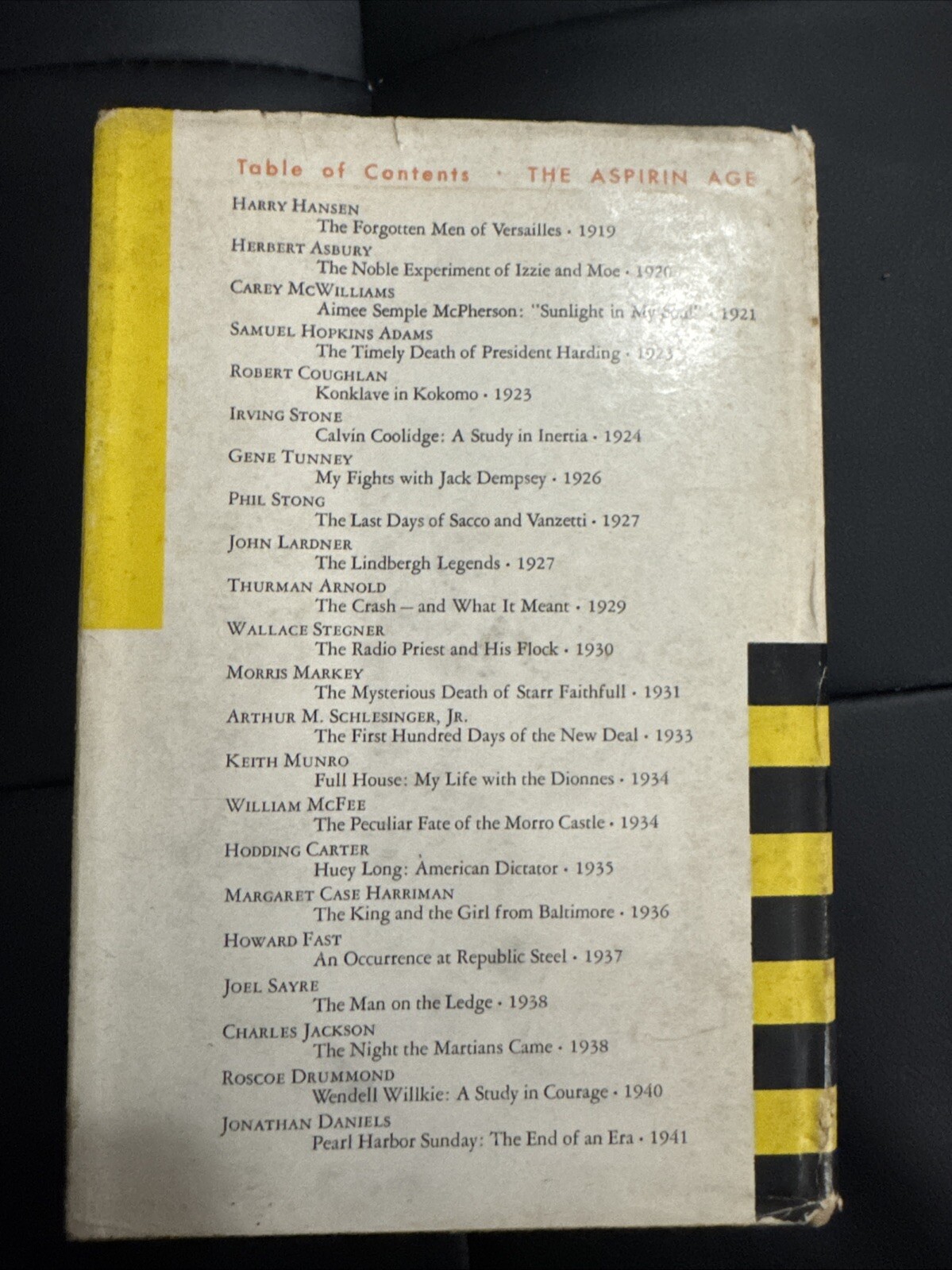
I have revisited the 22 essays by prominent writers in The Aspirin Age: 1919–1941, edited by Isabel Leighton and first published in 1949, dozens of times over the years. From one reading to the next, it has always felt like a weather system that keeps returning under different names.
The book’s title refers to the turbulent nature of the period, characterized by prohibition, the market crash, and dramatic societal changes that created a massive collective headache requiring a metaphorical “aspirin.” The book’s method is fragmentary by design. Rather than imposing a single explanatory frame, it assembles a world through episodes, atmospheres, and points of pressure, which is why it feels so contemporary every time I pick it up.
The years from 1919 to 1941 were marked by many crises happening at once. The aftershock of war. The acceleration of technology. The rise of mass media. Economic collapse. Labor unrest. Political demagoguery. Moral panic. The uneasy glamour of modern life colliding with widespread fragility. What the book captures so well is the feeling of living in an age when the structures people relied on no longer seemed trustworthy, and no stable language yet existed for what was replacing them.
That is one of the first lessons the period offers us now: turmoil is cumulative. It arrives as a cluster of pressures that threaten institutions and scramble the emotional grammar of daily life. People begin to feel afraid and unmoored. The categories that once organized public reality lose their authority.
Periods of instability create intense demand for narratives that reduce complexity to drama. During the interwar years, radio helped amplify charismatic figures who could turn grievance into theater and fear into belonging. The medium itself mattered. Mass communication didn’t simply distribute information; it intensified mood. It made persuasion more intimate and performance more political. With each read, The Aspirin Age essays have reminded me how new media ecologies alter what we know and what we can bear.
This feels uncannily familiar. When the velocity of a culture increases, when images and claims arrive faster than reflection can metabolize them, public life becomes more volatile. Not only because lies spread, but because attention itself becomes destabilized. One of the profound interwar discoveries was that modernity could overwhelm the civic nervous system. We are still living with that realization.
And yet The Aspirin Age can teach us something about scale. One of the reasons the book endures is that it doesn’t reduce history to presidents, policies, and abstractions. It moves through scenes, encounters, and social textures. It reminds us that large periods are lived locally. Disorder is experienced in kitchens, on factory floors, in neighborhoods, in speech patterns, in habits of reading and listening. The great convulsions of an era always resolve themselves in small human arrangements.
This matters because when a period feels historically overcharged, people often respond by thinking only at the largest possible scale. They look for the total explanation, the defining thesis, the grand corrective. But history often changes first at the level of sensibility: how people gather, what they trust, what they repeat, what they fear, what they begin to find intolerable. A culture shifts before it fully understands that it is shifting.
The Aspirin Age is a study in what happens when democratic culture becomes overstimulated, economically strained, and symbolically unstable all at once. It shows how easily fear becomes style, how quickly rhetoric becomes infrastructure, and how fragile the boundary is between modern energy and collective exhaustion.
But it also preserves another truth: that even in chaotic eras, people keep making meaning. They improvise forms of endurance. They invent new vocabularies. They find ways to name the pressure they are under. That is, perhaps, what books like this are for—to remind us that other generations also struggled to think clearly inside the storm.
The challenge now is to ask what that earlier turbulence can help us notice about the present. What emotional habits are we forming now? What forms of spectacle are feeding on fatigue? What kinds of public language are becoming unbearable? And what kinds of attention, care, and civic imagination might still be able to interrupt the cycle?