


Towards a Poetics of Branding
While continuing to discover forms that reveal something hidden about branding, poetry continues to cross my mental transom. Not a surprise, really, since it embodies both ideas and techniques that interest me: It understands rhythm. It understands restraint. It understands that meaning doesn’t have to arrive in a straight line.
A delightful piece by A.O. Scott in The New York Times recently brought the villanelle to my attention.
It is among the most structured of poetic architectures: nineteen lines, two repeating refrains, a fixed rhyme scheme. It seems almost mechanical as the same lines return again and again, each on schedule, each constrained by the demands of the form. But spend a little time with a villanelle and you’ll discover that its power lies in what repetition does to meaning over time. A line returns, and because the poem around it has changed, the line changes too. The words are the same but their force is not. This feels very close to branding.
Repetition With a Difference
A brand is rarely understood all at once. It is encountered in fragments — a phrase, a visual cue, a gesture, a tone of voice, a remembered interaction. These moments accumulate. They recur. And in that recurrence, they begin to form a pattern.
The strongest brands don’t rely on novelty alone. They return to their essential ideas repeatedly, but not mechanically. A core promise may show up in a homepage, then in packaging, then in customer service language, then in physical space. The same basic signal appears, but each time it lands in a different context. Each repetition gathers new meaning from what surrounds it. This is precisely the logic of the villanelle.
The refrain doesn’t deepen because it changes its wording. It deepens because the world around it changes. Meaning accrues through return.
Branding, at its best, works the same way. A strong identity is not a one-time statement. It is a practiced recurrence — a pattern — that becomes increasingly legible, increasingly charged, because it knows how to come back.
The Discipline of Form
One of the reasons the villanelle is such a useful metaphor is that it reminds us that structure is not the enemy of expression. On the contrary, structure can be what makes expression vivid.
A villanelle doesn’t ask the poet to say anything they want in any way they want. It imposes a rigorous architecture that intensifies feeling rather than flattening it. The constraints force attention and compel choice. They make every variation matter. And they demonstrate that a system can be tightly structured and still feel alive, so long as the returns are meaningful and the variations are precise.
Taken into the brand metaphor, constraints don’t deaden a brand. Empty repetition does.
Refrain as Identity
The repeated lines in a villanelle carry its weight. They are the poem’s load-bearing beams. Everything else moves around them. They provide the poem with memory, but also with inevitability. By the time the refrain returns at the end, it has become more than itself. It has absorbed the poem’s full emotional potency.
Brands, too, have refrains. Not always in literal copy (though sometimes there as well). More often, the refrain lives in a worldview, a cadence, an attitude, or a pattern of behavior that becomes unmistakable over time. It is the signal that returns often enough to become part of the audience’s own internal recognition system.
This is one reason the most effective brand work often feels more like composition than like invention. The task is to know what deserves to return, and how — not to keep saying something new:
What phrase, gesture, or tone can bear repetition without going flat?
What part of the brand is strong enough to function as refrain?
What must remain stable so that the rest of the system can move around it?
These are poetic questions, but they are also strategic ones.
Return Without Redundancy
The villanelle also helps us make an important distinction: repetition is not the same as redundancy. Redundancy says the same thing with no new consequence. It creates fatigue because nothing is added by the return. But repetition, when handled with intelligence, creates expectation. It builds emotional architecture. It allows us to feel the difference between one return and the next. The line comes back as echo — altered by time, by context, by the surrounding pattern of meaning.
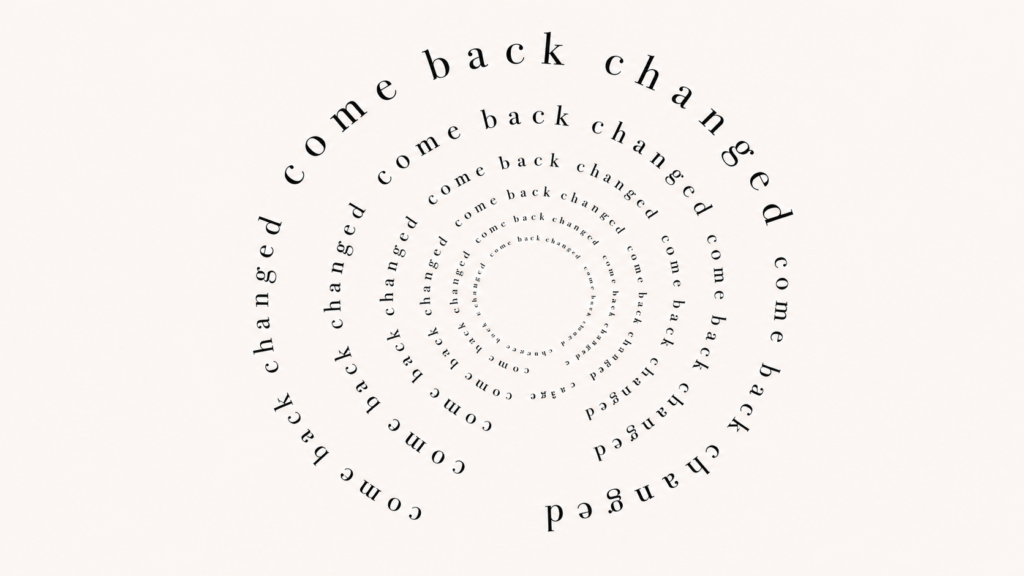
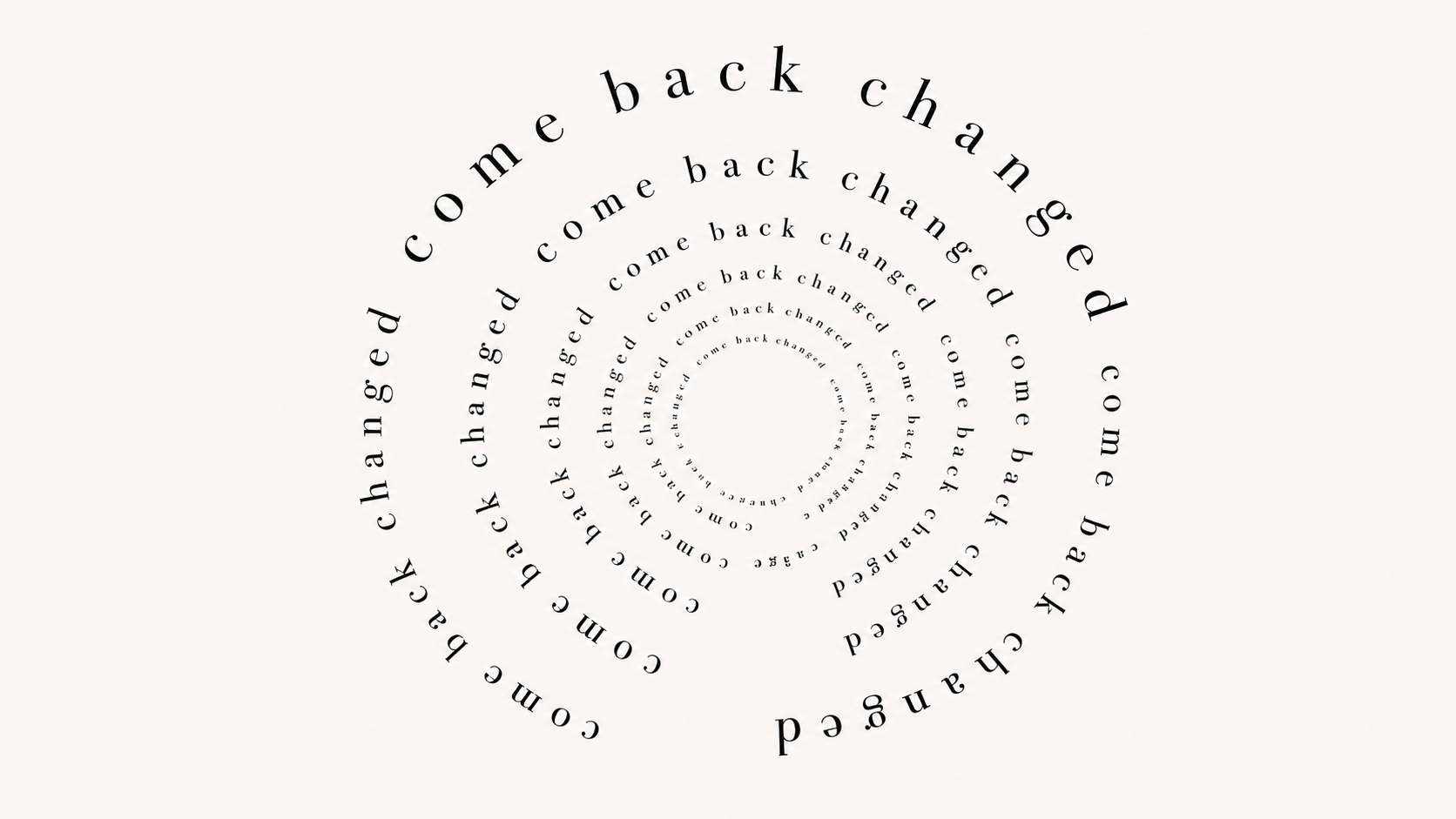
This is the challenge for brands. A brand that repeats itself too literally begins to feel deadening. Its signals become inert through overuse. But a brand that never returns to its core loses memorability and trust. Somewhere between those two failures lies the art: the ability to come back changed. That is what the villanelle knows how to teach.
The Emotional Life of Recurrence
There is a reason poets choose the villanelle for subjects like longing, grief, inevitability, obsession, or memory. It is a form uniquely suited to feelings that don’t move cleanly from beginning to end. The repeated lines enact the mind’s need to circle back and revisit, reframe, and re-feel. The poem becomes emotional through recurrence.
Branding can operate in a similar way. People don’t build relationships with brands through a single decisive insight. Trust emerges gradually, through repeated contact. Recognition deepens through return. Meaning becomes felt because we encounter the same underlying signal across time, in different emotional conditions, until it becomes part of how we understand the brand — and sometimes ourselves.
The Art of Saying It Again
In a culture obsessed with novelty, the villanelle offers a quiet argument for recurrence. It suggests that what matters is what’s worthy of return, not always what is new.
That is a challenging idea for branding, where so much energy is spent trying to generate fresh language, fresh campaigns, fresh relevance. But freshness without form is quickly forgotten. The more difficult and more enduring task is to build a system in which return becomes meaningful — where the repeated gesture feels newly-charged because of where and how it arrives. When a brand mirrors a villanelle, it becomes powerful because it knows how to come back, building recognition through refrain, depth through context, and trust through form.