


The Power of Symbols in Times of Uncertainty
There are moments in history when language begins to lose its footing. It isn’t that people stop caring, or that they no longer feel compelled to express themselves. Quite the opposite. The urgency remains. But words themselves begin to feel insufficient—too exposed, too contested, too easily stripped of nuance or turned against their speaker. In such moments, expression does not disappear. It simply migrates to other vessels. A gesture. A color. An object made by hand. Something that can move quietly between people, carrying meaning without ever needing to announce itself.
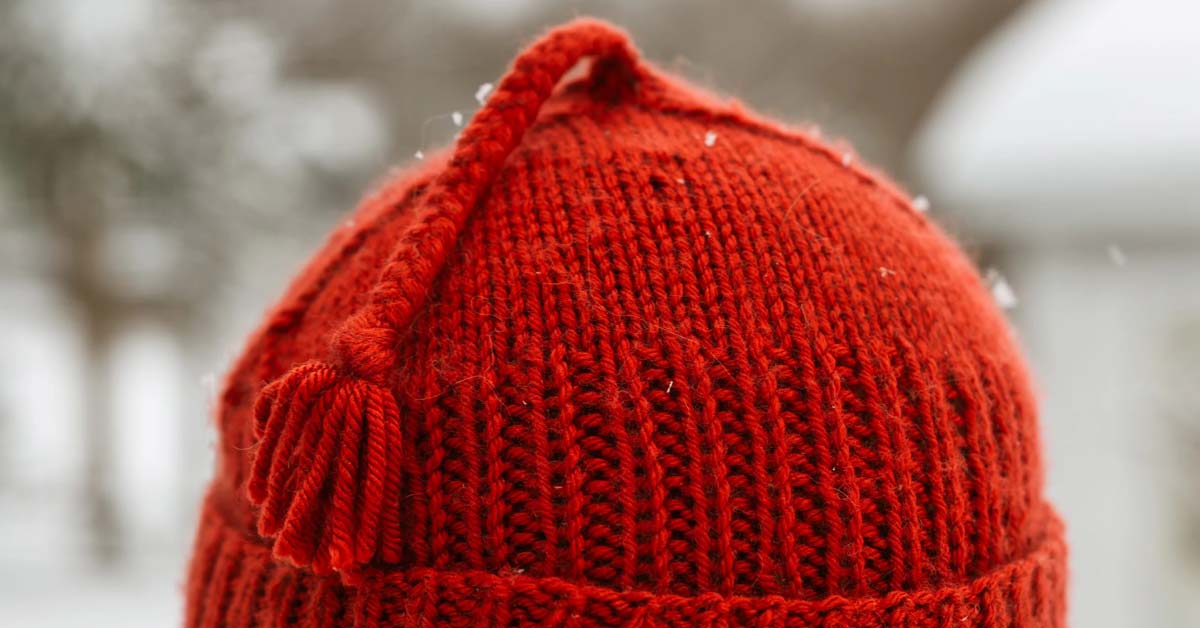
We have seen this before. During the Nazi occupation of Norway in the 1940s, ordinary citizens found themselves living under conditions where open dissent could carry devastating consequences. Yet resistance didn’t vanish. It simply took on a subtler form. People began wearing red woolen caps—simple garments rooted in rural Norwegian tradition, familiar and unremarkable in other times. But under occupation, the hats began to carry a different kind of weight. They became signals, not through declaration but through recognition. No coordinated campaign instructed people to wear them. No formal movement emerged to explain their purpose. The meaning lived in the shared cultural consciousness, passing quietly from one person to the next. To see another person wearing the same red cap was to experience a moment of mutual recognition—a silent affirmation that something essential remained intact beneath the surface of imposed control.
Eventually, the occupying authorities recognized what was happening. The hats were banned. This prohibition revealed something fundamental about power, which depends, in part, on shaping what can be seen and understood. Symbols that escape that control—symbols that move through communities by resonance rather than instruction—can become deeply destabilizing. What made the hats powerful wasn’t their visibility, but the care embedded in their making.
There is a word now used to describe this phenomenon: craftivism. A blending of craft and activism, the term captures the use of handmade objects as vehicles of cultural expression and collective identity. Yet the practice itself is far older than the word. Craftivism represents a return to a slower form of communication, one that unfolds through the deliberate investment of time and attention. To knit a hat is to participate in its becoming. Each stitch records a moment of presence. The object accumulates meaning through the act of its creation. Unlike mass-produced symbols, which can be replicated infinitely without friction, handmade objects resist abstraction. They carry evidence of the human hand. They remind us that meaning is cultivated, not merely transmitted. This difference matters.
In physics, resonance describes the way one vibrating body can cause another to vibrate in synchrony, not through force, but through proximity and shared frequency. Something similar occurs within human communities. We attune to signals constantly, often without conscious awareness. When a symbol aligns with a shared emotional or cultural reality, it begins to move. One person recognizes it, and then another. The symbol becomes less an object than a field, a shared point of reference that allows individuals to locate one another within an otherwise uncertain landscape. This is what symbols make possible. They allow private recognition to become collective. They answer questions people rarely voice aloud: Am I alone in feeling this? Am I alone in seeing this? When that recognition becomes visible, even subtly, it changes the texture of shared reality. Isolation begins to give way to coherence. Fear loosens its hold. A sense of continuity reasserts itself.
Brands, at their deepest level, operate within this same symbolic terrain. They are not simply collections of visual elements or strategic constructs. They are systems of meaning that people encounter, interpret, and sometimes carry into their lives. The most resonant brands don’t impose themselves through volume. They enter the cultural field more quietly. They offer signals that people recognize intuitively, not because they have been persuaded, but because something already present within them has been acknowledged. This kind of resonance cannot be engineered purely through optimization. It emerges through coherence—through the alignment between intention and expression, between what is said and what is done. Like a handmade object, a resonant brand carries evidence of care. It feels considered. Intentional. Human.
In uncertain times, this quality becomes especially important. The instinct, when conditions become unstable, is often to speak louder, to assert clarity through repetition and amplification. But amplification alone does not create meaning. Meaning emerges through attention—through the patient work of listening for what is already present, and responding in kind. Craftivism reminds us that the most enduring symbols are not those imposed from above, but those cultivated from within. They arise from the shared experiences of individuals who, in choosing to make something, also choose to remain present to one another.
This presence is a form of courage. Not the dramatic courage of confrontation, but the quieter courage of continuity. The courage of care. The courage of refusing to allow uncertainty to sever the threads that connect us. Symbols do not resolve uncertainty, but they make uncertainty inhabitable. They create points of orientation within shifting terrain. They allow individuals to recognize one another as participants in a shared world.
For brands, the lesson isn’t to create symbols in the hope that they will resonate. It is to cultivate the conditions in which resonance can occur. To understand that meaning cannot be forced into existence, but must be tended with the same patience and attention that craft demands. Because when something resonates—a knitted hat, a gesture, or a brand—it reminds us that we are not alone. And in times of uncertainty, that reminder can change everything.