


Against the Prix Fixe
Some brand experiences arrive already overdetermined, where everything has been curated in advance. The offering has been elevated, plated, and described with enough narrative garnish to suggest that every choice has already been made for you…beautifully. This is the branding equivalent of the prix fixe: controlled, composed, complete.
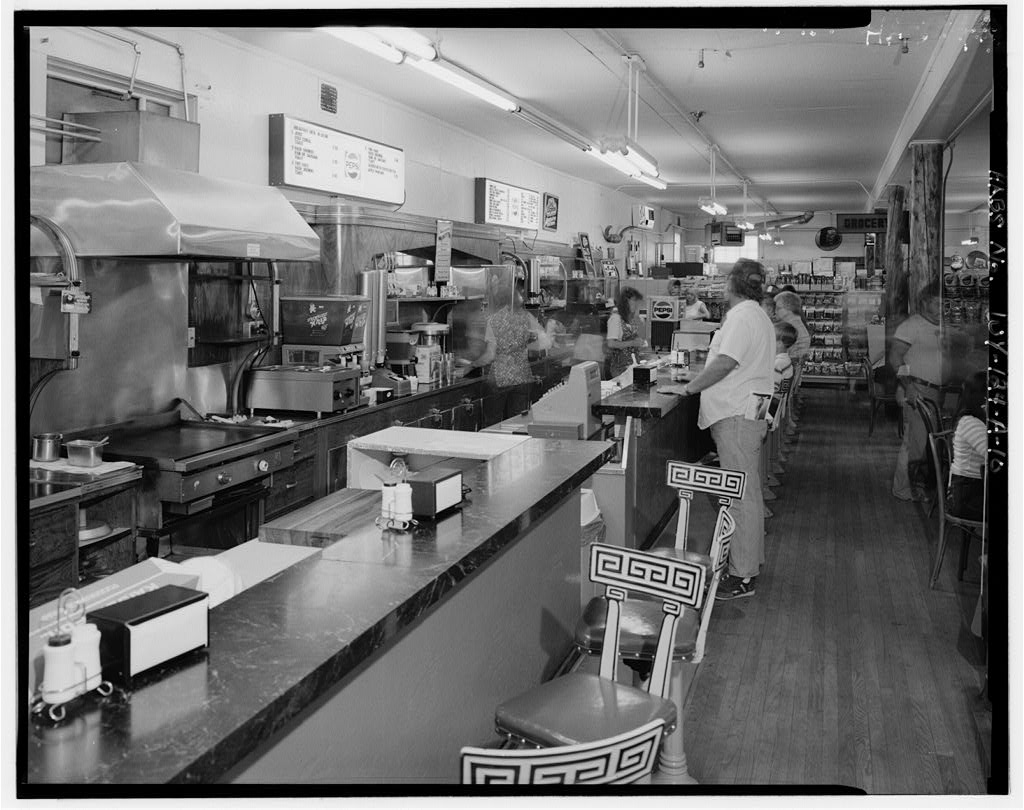
Sometimes it works, but we consider another model of value that feels more durable. It comes from the vernacular of the diner or lunch counter, where a hand-lettered sign announces the blue plate special and reminds you what’s fresh today. Not your typical frame of reference in brand strategy, but perhaps it could be.
Historically, the blue plate special emerged in the early decades of the twentieth century, rising alongside diners, lunch counters, railway restaurants, and the broader rhythms of modern working life. References to the term began appearing in print by the mid-1910s, and by the 1920s and 1930s the blue plate lunch or dinner had become a fixture of American everyday eating. Food historians and etymologists generally agree that the phrase referred to an inexpensive, full meal — typically meat or fish with vegetables and starch — served quickly and affordably on a single plate, often a divided plate decorated with a blue pattern. The details of the origin remain somewhat murky, but the larger meaning is clear: the blue plate special was a practical form built for repetition, trust, and use under modern conditions of speed and constraint.
The Container Holds, the Offering Changes
Part of what makes the blue plate special so enduring as a cultural form is its architecture. The frame remains recognizable: a complete meal, modestly priced, served with speed and regularity. But within that frame, there is movement. Monday may bring meatloaf. Tuesday, roast chicken. Wednesday, something stewed longer, made richer by the cadence of the week or the season.
This is a helpful corrective to one of the most persistent misunderstandings in branding: the belief that consistency requires sameness. It does not.The best brand systems work much like the blue plate special by creating a dependable container — a set of expectations, a rhythm, a recognizable form of value — while allowing variation inside the frame. The audience doesn’t need everything to remain identical. They need to trust the logic by which change occurs, making trust more potent than novelty.
In fact, novelty without structure tends to exhaust rather than delight. But variation within a coherent form creates something better: anticipation, return, appetite, allowing a brand to remain alive without becoming erratic, and familiar without becoming stale.
A Different Kind of Value
The blue plate special doesn’t compete through scarcity. It’s not exclusive, rarefied, or ceremonially unveiled. It doesn’t rely on a mythology of access. Instead, its value is immediate and more democratic. It is priced to be chosen. It is made to be useful. It serves.
We are living through an era in which nearly everything has been “elevated.” Everyday objects are dressed in the language of luxury. Ordinary experiences are rebranded as immersive journeys. The rhetoric of disruption and premium-ness has become so ambient that many brands seem unable to describe themselves without inflation.
Ah, but the blue plate special resists all of that simply because it doesn’t overstate its significance or pretend that lunch is transcendence. There’s a refreshing dignity in that restraint. And for brands, that restraint can become a profound advantage. Not every offering needs to be mythologized. Sometimes what people want isn’t aspiration, but proportion and honesty. Something that meets the moment without surrounding itself in unnecessary theater.
The Daily Special as Ritual
One of the most interesting things about the blue plate special is that it belongs to the rhythm of days, not the economy of events. It is not a launch. Not a reveal. Not an activation. It becomes meaningful through recurrence. This is where the metaphor deepens. Much of contemporary branding still orients itself around peaks: product drops, campaign moments, announcements designed to puncture the scroll. But real affection is often built in the ordinary, repeatable interactions that become part of the texture of life.
The blue plate special understands this intuitively. Its power lies in becoming a trusted answer to a recurring need. It doesn’t ask to be the center of your identity. It asks to become part of your day. This is a vision of brand equity built through dependable rhythm. It reminds us that repetition need not mean deadening. Repetition, when handled with variation and care, can become ritual. And ritual is one of the strongest forms of attachment there is.
Constraint as Clarity
The blue plate special also emerges from a logic of constraint. Limited ingredients. Limited time. Limited margins. And yet within those constraints, something surprisingly elegant becomes possible. This, too, is a lesson worth preserving. The best brands are rarely the ones with infinite options. They are the ones that know what they can offer, repeatedly and well, within real limits. Constraint forces selection. Selection produces clarity. And clarity, over time, builds trust.
What the Brand Serves
Perhaps the most useful shift the blue plate special offers is that it moves the conversation away from identity alone and toward offering. It asks who are you? and also what do you reliably know how to serve? That question changes the posture of branding in a meaningful way. It makes the work more relational, less concerned with abstract self-definition and more attentive to the consistent value a brand can place into the world.
Seen this way, a brand moves beyond being a machine for self-expression into a practice of provision. Its meaning expands beyond what it says about itself into what it gives, day after day, under real conditions, without losing coherence. What does it nourish? What does it steady? What kind of appetite does it understand, not as a market segment, but as a recurring human need?
This helps explain why the blue plate special can be such a useful metaphor. It suggests that the strongest forms of attachment aren’t always built through spectacle or aspiration, but through the quieter, steadier experience of being reliably met. The brands that become beloved are often the ones that understand this intuitively. They know that being meaningful doesn’t always require being extraordinary. Sometimes it requires being present in a form that is generous, intelligible, and worth returning to.
The Modesty of Endurance
The blue plate special ultimately teaches the enduring strength of proportion. It knows exactly how much to promise, and no more. It doesn’t mistake accessibility for cheapness, or familiarity for dullness. It understands that value can be built through rhythm, consistency, and a quiet fidelity to what people actually need.
This feels especially relevant now, in a cultural environment saturated with overstatement. The future may belong less to the brands that strive to turn every interaction into an event, and more to those that understand how to create forms that are coherent enough to be trusted, flexible enough to stay alive, and generous enough to keep inviting return.